
When visiting Montreat, you may notice occasional differences in how we use the word “Graybeard” or “Greybeard.” Typically, Graybeard with an “A” refers to Graybeard Trail and Graybeard Mountain, while Greybeard with an E is used when refering to Greybeard Road. So why are they different? We’ve asked ourselves that question and the research seems to indicate that these variations in spelling are not the result of two separate origins but instead reflect a gradual shift in spelling conventions over time. It appears that variations of this kind are actually quite common with locations named before standardized naming practices were widely enforced.
Historically, both spellings make appearances on early maps of Montreat. Both “gray” and “grey” are accepted spellings of the same English word, with “grey” being more common in British English and “gray” being more common in American English. This has led us to conclude that the shift toward “Graybeard” reflected that spelling’s wider adoption within the U.S., with federal standardization practices further reinforcing that preference.
In contrast, roads and local infrastructure often preserve older naming conventions. Greybeard Road appears to be one such case where the earlier spelling was retained, likely because road names are typically established by local authorities and are not always updated to match federal naming standards. Once a road name is officially recorded in municipal or county systems, it tends to remain unchanged to avoid confusion in addresses, navigation, and legal documents. This helps to explain why the older “Greybeard” spelling persists in certain contexts even as “Graybeard” has become dominant elsewhere.
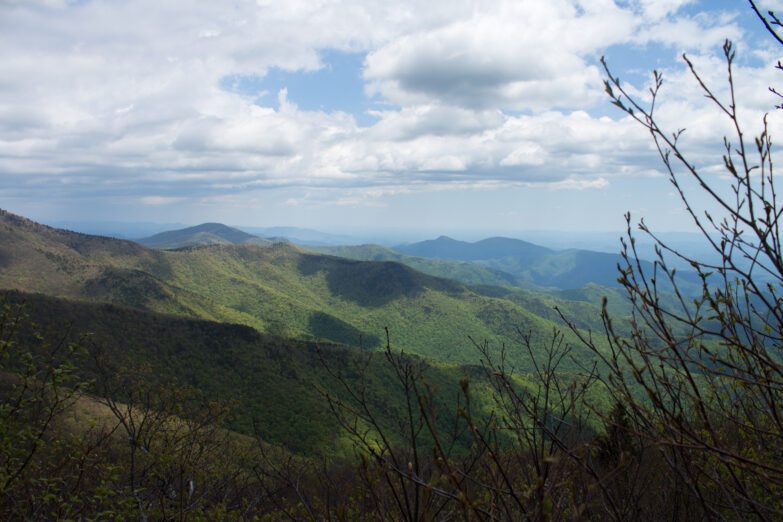
So, why is it called Graybeard Mountain, anyway? According to local legend, Graybeard Mountain is the “father” of the Seven Sisters mountain range. When the fog rolls in and sinks into the valley, it creates what has been described as a gray “beard” for the mountain peak, adding to its perception as a paternal figure.
In summary, our research indicates that the difference between “Graybeard Trail” and “Greybeard Road” is best understood as a product of linguistic variation and historical timing. “Greybeard” probably reflects older, less standardized usage, while “Graybeard” most likely represents the modern, standardized American spelling adopted by official mapping authorities. Because the trail and mountain names were standardized later, this would explain why they use “Graybeard,” while the road retains the earlier “Greybeard” spelling. In the end, both spellings seem to tell part of the same story rooted in Montreat’s history. Whether you find yourself on Graybeard Trail or driving along Greybeard Road, you’re experiencing two versions of the same legacy woven into our mountain landscape.
This article was originally published in the March edition of Montreat Conference Center’s email newsletter Stewarding God’s Creation which highlights information related to the Montreat Wilderness. Sign up to receive Stewarding God’s Creation directly in your inbox by clicking here.